
The World Endurance Championship (WEC) is enjoying what can only be described as the golden era of endurance racing.
Series chief executive Frédéric Lequien told BlackBook Motorsport as much earlier this year, and that statement has continued to ring true throughout a season in which the Porsche Penske Motorsport car of Kévin Estre, André Lotterer, and Laurens Vanthoor proved too strong for the rest of the field.
It has taken some time for the series to establish itself since being founded in 2012, but it is safe to say that any growing pains are firmly in the past. After all, it was initially challenging to recreate the excitement around its most famous event across the rest of the calendar.
First held in 1923, the 24 Hours of Le Mans has always been one of motorsport’s great races, maybe even its jewel in the crown. This crown, though, often weighed too heavy for WEC, as the grandeur of the historic race meant the Circuit de la Sarthe attracted all the attention of manufacturers and fans.
In this context, as a new championship on the global stage, WEC’s ongoing rise is all the more impressive. With the 2024 season now concluded, BlackBook Motorsport analyses the off-track talking points and assesses how the series is set up for the future.
Increased attention from manufacturers
The most noticeable difference with the 2024 WEC season straddles both on and off-track: the number of manufacturers in the series. 13 full-time Hypercar entries in 2023 grew to 19 this season, a 46 per cent increase.
Fans have been treated to packed grids after established motorsport marques like Alpine, BMW and Lamborghini joined the series. It’s a far cry from Toyota Gazoo Racing being the only realistic challenger for the LMP1 class in the 24 Hours of Le Mans just a few years ago.
Establishing the top-level Hypercar class in 2021 added another level of prestige to the championship, and it is no coincidence that manufacturers have started to take notice – Aston Martin will be yet another big name joining the grid next season.
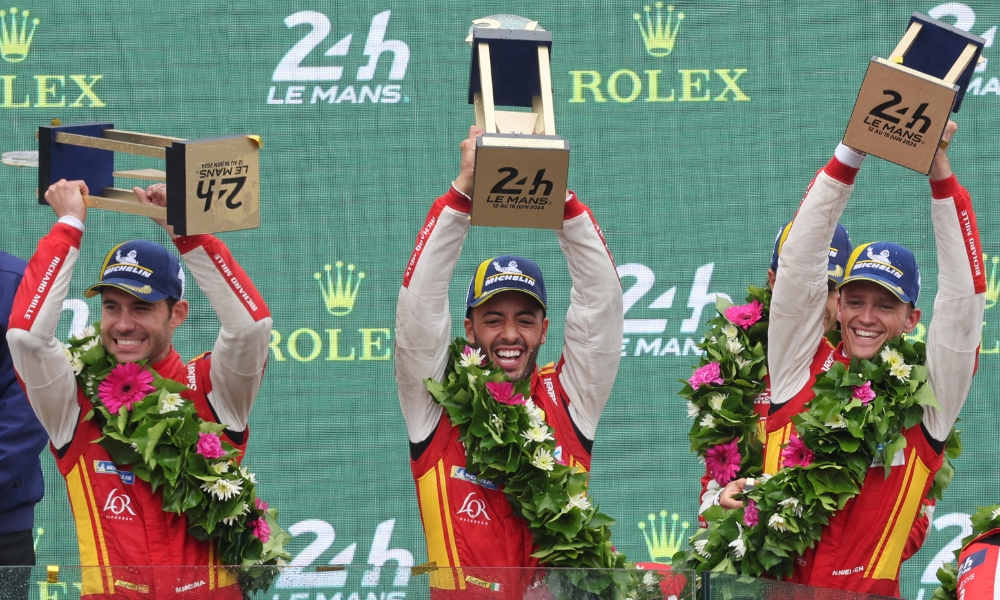
It’s also worth highlighting Ferrari’s triumphant return to endurance racing which has now produced back-to-back 24 Hours of Le Mans victories after another win this season.
However, one drawback of this rapid increase in manufacturers was the decision to drop the LMP2 class from the championship. Ultimately, the grids were too busy to accommodate three different categories, but many fans were still disappointed with the decision.
One potential benefit, though, is that new fans to the sport only need to understand two categories, Hypercar and LMGT3, which should make the series easier to understand and open it up to new audiences. As always, this is a reminder of how tricky it can be to simultaneously appease both new and old fans.

BMW, Alpine and Lamborghini (clockwise top left to right) have all joined the grid for the 2024 WEC season
Attendances and global expansion
So far, WEC appears to be getting the balance right, as attendances across the season seem stronger than ever.
There can be no denying that having names like MotoGP legend Valentino Rossi and ex-Formula One world champion Jenson Button draws attention from the wider motorsport community, but these new eyeballs are sticking around.
The most well-attended race this season was unsurprisingly the 24 Hours of Le Mans, which attracted a record crowd of 329,000, up from 325,000 in 2023. But this has been complemented by impressive crowds elsewhere.
The inaugural 6 Hours of Imola attracted 73,600 fans, while this year’s race at Spa set a record attendance for a WEC race not called the 24 Hours of Le Mans with 88,180 spectators – a 22.5 per cent year-over-year (YoY) increase.
While we await the complete figures from the season, it’s heartening to see three out of a total eight events deliver such promising numbers, especially with one of those races – Imola – being new for 2024.
Other new events in Doha, São Paulo and Texas emphasise the increasing globalisation of a series that now covers four continents despite such a small number of races.
The move to the US is particularly interesting, especially off the back of Nascar’s Garage 56 entry in last season’s 24 Hours of Le Mans. A record 113 million viewers tuned in globally for that race and the US delivered the second-biggest audience in the world.
More pointed activations could drive increased attention in the future, which will be key if WEC wants to expand its footprint not just in the US, but globally.
Can WEC maintain the momentum?
This all points to a promising future for the endurance racing championship, but the seeds of growth need to be planted now to capitalise on the momentum.
An unchanged schedule for the 2025 season is hardly surprising after four new events were introduced this season, suggesting that the focus for now is on strengthening the races on the current calendar before looking elsewhere.
One strategy that WEC executives have honed in on is the ‘Drive to Survive’ model that has served Formula One so well. The risk here is that the format doesn’t seem to have had the same impact for other motorsport series, so offering something unique to endurance racing is crucial.
To that end, ‘Meet the Legends’ is an eight-part series focusing on ‘the sporting, business and aspirational stories’ of WEC’s major manufacturers. Airing in November, each episode will profile one of Ferrari, Alpine, Peugeot, Cadillac, Porsche, Lamborghini, BMW, and Toyota.
The breadth of manufacturers is clearly the series’ strength right now, but it remains to be seen whether those brands will capture the attention of audiences in the same way as the personality-led format of Drive to Survive.
Either way, that advantage is set to increase, with Hyundai the latest global marque to commit to an endurance racing programme through its Genesis brand. It is unclear when the South Korean manufacturer is looking to debut, but WEC already has plans to expand the grid to 40 cars from next season.
WEC also made a very public statement of intent around sustainability at this year’s 24 Hours of Le Mans with MissionH24. In short, the hydrogen electric car completed test runs at the event and WEC is intent on adding a hydrogen category at that race in particular from 2026.
Staying at the front of technological innovation will ensure WEC remains relevant to manufacturers, but encouraging fans to buy in to this journey will present itself as the long-term challenge for the series.
Related posts
- Soaring viewership, a global calendar, and blue-chip manufacturers: WEC’s CEO on the ‘golden era of endurance racing’
- Podcast | 24 Hours of Le Mans preview: The golden era of endurance racing