
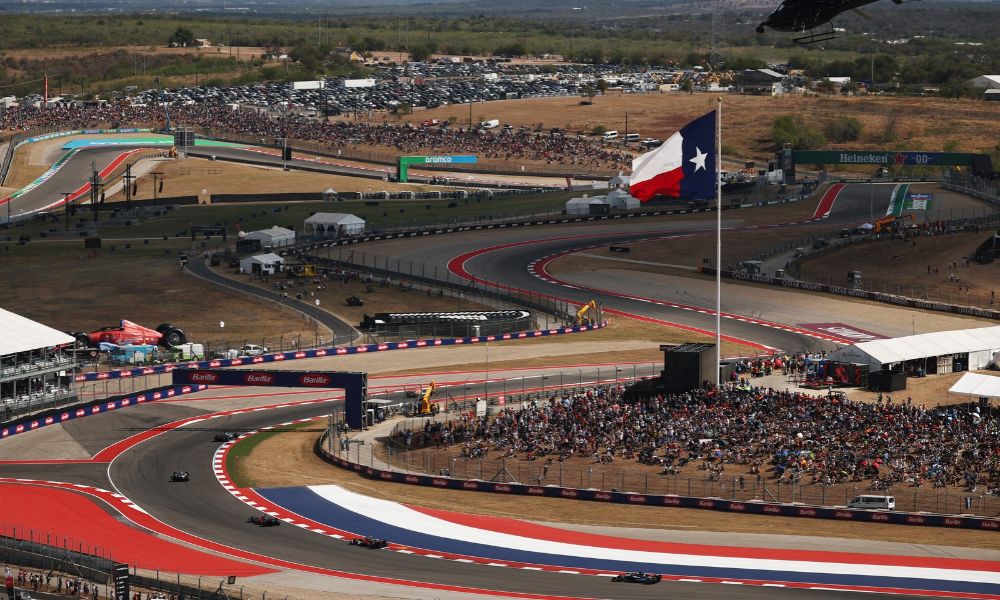
Long before the glitz and glamour of Miami and Las Vegas joined the Formula One calendar, the Circuit of The Americas (COTA) in Austin was putting in the hard yards to establish the championship in the stubborn US market.
For all its recent success in the US, Formula One had struggled to find a permanent home in the country before COTA’s arrival. Since Sebring hosted the first official United States Grand Prix in 1959, eight further venues had tried and failed to become a regular fixture on the schedule.
Even COTA struggled to endear itself to US fans in its initial seasons – or “the years we try to forget about”, as track chairman Bobby Epstein wryly tells BlackBook Motorsport ahead of the circuit’s 14th US Grand Prix this weekend.
Today, it’s a different story. By the end of its current contract, which was extended to 2034 last year, COTA will have become the longest-serving host of the US Grand Prix, surpassing the 20 races staged at Watkins Glen between 1961 and 1980.
Much of that success is down to a free-flowing, fan-favourite circuit that produces good racing, but Epstein also credits the host market. In his words, few cities have “evolved as much as Austin has over the last 15 years”.
The numbers certainly support that thesis. According to data from the US Census Bureau, Austin was one of the fastest-growing major metropolitan areas in the country in the 2010s. Its partnership with Formula One has proven to be a symbiotic relationship, too, with the US Grand Prix delivering US$7 billion in economic impact to Austin and Texas during its first decade on the calendar.
COTA is not resting on its laurels, though. In an increasingly competitive North American motorsport landscape, Epstein and his team are now focused on maintaining and building on that success.
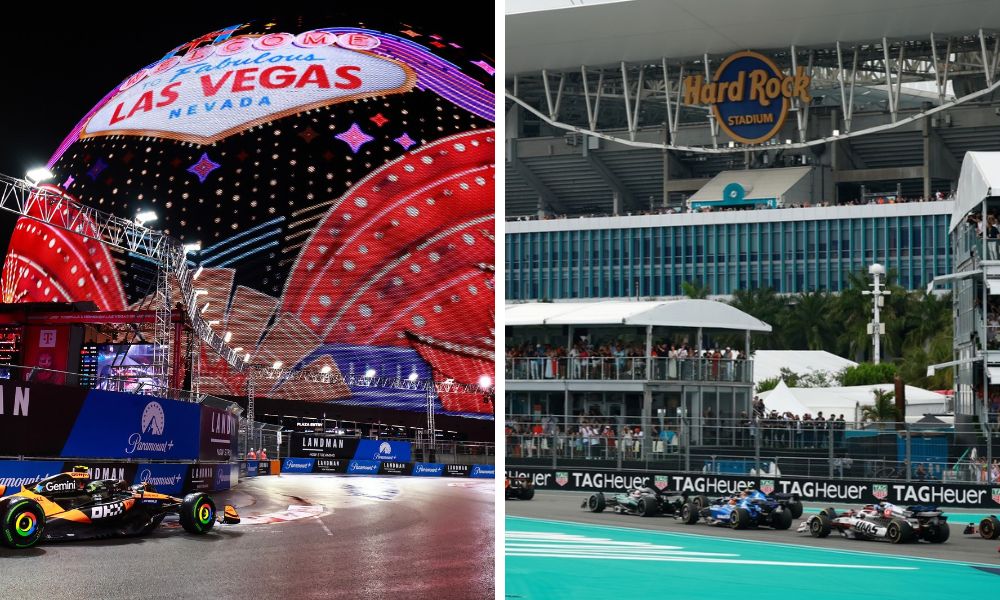
COTA is now one of three US-based circuits for Formula One, with Miami and Las Vegas having joined the schedule in recent years (Image credit: Getty Images)
A rollercoaster weekend
Formula One’s most recently published fan data estimates its American fanbase has grown to 52 million people, with 73 per cent of respondents to its survey last year planning to attend a US race in the future.
In that context, Epstein says that so far, there have been “enough fans to go around”, which has eased any potential strain from Miami and Las Vegas joining the calendar. Even so, COTA is looking to diversify its offering through a partnership with global investment firm Carlyle, which is designed to accelerate the circuit’s transformation into a year-round destination and ensure it stays relevant beyond Grand Prix weekend.
That’s not to say the circuit isn’t in a good place already. COTA’s motorsport interests extend well beyond Formula One, with Nascar, MotoGP and the World Endurance Championship (WEC) all racing there every year. Epstein also points to COTA’s 1,300-acre campus as a “tremendous advantage”, allowing the venue to host concerts and festivals on top of motorsport.
All told, the circuit averages 1.3 million visitors per year, but the ultimate goal is to grow that number significantly and develop a more consistent, year-round revenue stream.
With a car park that holds 25,000 cars, as well as concession stands, restrooms and what Epstein describes as a great hospitality team, the question was how to make more of those assets.
The solution? A theme park.
Situated between turns 19 and 20, COTALand spans 30 acres and has 34 rides, including five rollercoasters. It opened just four weeks before this weekend’s race, meaning attendees and TV viewers will see a very different-looking circuit.
Epstein thinks visitors are going to be “blown away” by the development, but most promising is the potential to grow COTA’s appeal as a destination for non-motorsport fans.
“Our expectation for year one is that people come and have a good experience at COTALand, and you see attendance grow to an annualised rate above a million visitors,” he says. “Those one million visitors, which a lot of them are kids, will get excited by what they see next to the [theme] park and say: ‘hey, maybe we should come back for a race’.
“Five years from now, ten years from now, that will pay dividends by having built this amusement park next to the track.”
‘There is value in the ticket’
Ensuring the race weekend itself delivers is just as – if not more – important. The US Grand Prix has consistently attracted around 430,000 fans since the Covid-19 pandemic, making it one of the best-attended events on the calendar.
According to Epstein, more than 10,000 people camp trackside across the weekend, so maximising the entertainment offering outside of the race is crucial.
New for this year is Grand PrixView Thursday, which is designed to give fans early access to the grounds and build excitement ahead of the race weekend. It’s free for weekend ticket holders, while the general public can attend for just US$20.
“It does two things for us,” Epstein explains. “One, it gives the community that’s never been and is curious about what this place is and what F1 is about … a chance to come see it.
“But it also allows us another equally important programme. We’re bringing 8,000 students out that day … half the day is going to be dedicated to students and giving them a chance to interact with the teams, with F1 Academy, to hear from engineers and marketing teams. It’s a chance to inspire the students and that’s where that day becomes really meaningful.”
F1 Academy will also be part of the race weekend, returning to COTA for the first time since its inaugural season in 2023 and giving the circuit an opportunity to capitalise on the rising number of women following the sport. Indeed, according to Formula One data, women account for 75 per cent of new fans of the sport.
The race weekend will also feature a full music programme, something which has worked well for promoters since 2016, when Taylor Swift drew what was then the largest crowd in COTA’s history after several years of falling attendances. This year, Post Malone, Maroon 5 and Alesso will perform across the weekend.
Epstein adds: “Those who have come to an event at COTA and come to the US Grand Prix have found that there is value in the ticket, and that there’s so much fun to be had. They’ve told their friends and people are coming back – we’ve got a lot of return visitors.”
‘Running on a hamster wheel’
According to Epstein, COTA’s transformation from a circuit that hosts races to a year-round destination has also meant building a team with a range of expertise.
“We originally hired a lot of people who knew about motorsport and were fans of motorsports – that actually was a critical error in many ways,” he says.
“What we needed to do was hire people who are really good at fan hospitality and customer service, because that’s the business we’re in.”
That mindset can be seen in some other ongoing developments at COTA. Indeed, the circuit is revamping its premium offering, with an improved Paddock Club proving to be high on Formula One’s wish list when the venue extended its hosting contract until 2034 last year. The new facility will sit at turn one, the uphill, sweeping left-hander that has become one of the most recognisable corners in Formula One since COTA joined the calendar.
“They had a desire to expand their Paddock Club,” Epstein says. “And I think [Formula One chief executive] Stefano [Domenicali] shares some of my creative desires for coming up with unusual and special twists, and this additional Paddock Club at the top of turn one was part of our negotiation for the contract extension.”
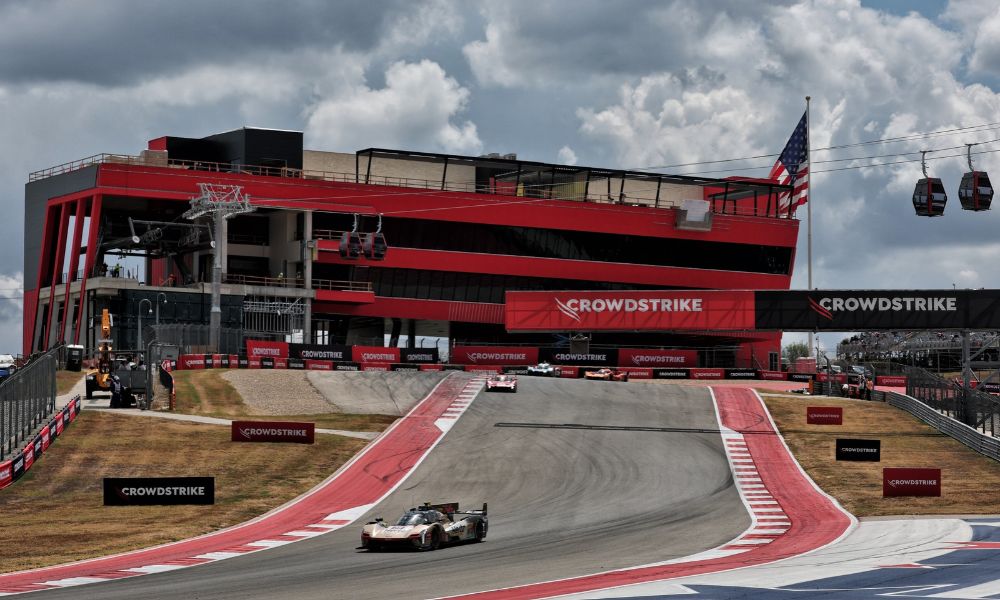
The new hospitality building will be hard to miss at the circuit’s iconic first corner, seen here still under construction during the World Endurance Championship (WEC) event earlier this year (Image credit: Getty Images)
In 2027, COTA will take its premium push even further by launching a private members’ club called The Circuit. Previously, COTA rented out the track to interested parties on an ad-hoc basis, which Epstein compares to “running on a hamster wheel trying to find the next tenant”.
Now, an exclusive group of 250 members will get year-round access to the track and its facilities, as well as curated driving, dining, and hospitality experiences. COTA has yet to publish membership pricing, though Epstein has said it will probably be the most expensive motorsport club in the world.
“For us as a business, when we look at long-term stability, I think that model should be a lot more sustaining and easier to succeed than the hamster wheel rental model,” he says.
Members also get skip-the-line passes at COTALand, linking the circuit’s two new year-round products.
There are bigger plans for the circuit still. COTA is in the process of constructing a US$985 million resort next to the circuit, which features a 1,000-room hotel and a 170,000-square-foot convention centre. There are even plans to open a water park.
While motorsport will always be at its core, COTA ultimately wants to be seen as more than just the host of a Formula One race. Whether it’s the racing, the rollercoasters or the concerts, the overall aim is for the venue to offer something for everyone throughout the year.
For now, though, all focus is on COTA’s 14th Grand Prix.
“I think we’re healthier than ever,” Epstein says. “Every year we add a little bit, and we’re excited to unveil the new things that are part of this year’s event that just make it bigger and more fun and more attractive to an even wider audience.”

Don’t miss the latest news and insights from across the business world of motorsport. Subscribe to the BlackBook Motorsport Weekly newsletter here.