
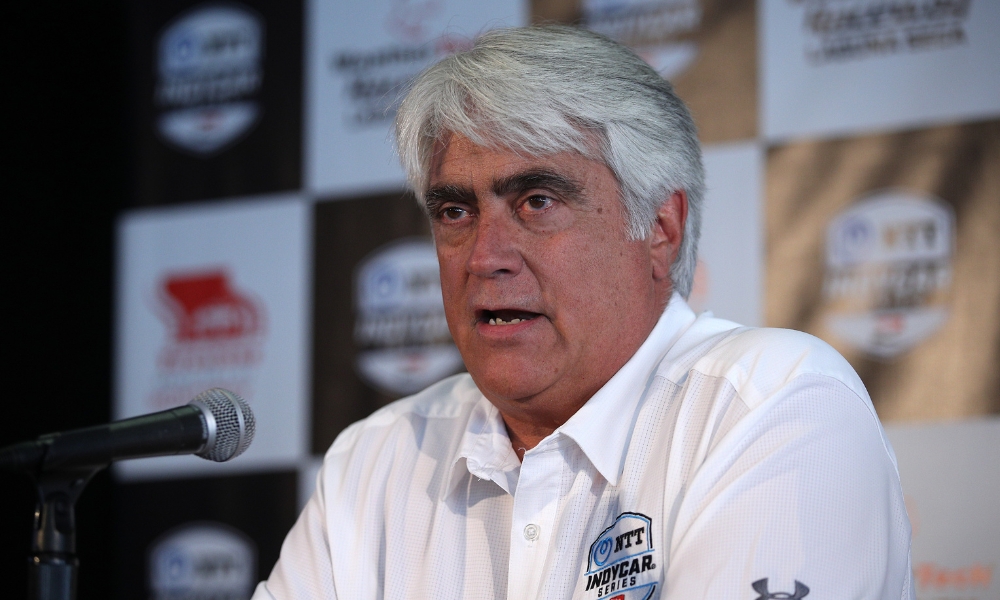
The recently announced TV deal with Fox is unprecedented in scale, with 19 broadcast windows for IndyCar from next season.
In fact, it will be the only motorsport series to benefit from exclusive free-to-air (FTA) network coverage in the US – not even Formula One or Nascar can lay claim to that.
Crucially, this is welcome good news for the North American series. Describing 2024 as a tumultuous season for IndyCar would be an understatement, with various on- and off-track issues stalling what has been marked growth in recent years.
Viewership is struggling across the board, with no race outside of the Indianapolis 500 passing one million viewers at the time of writing – overall, non-Indy 500 viewership is down 11 per cent compared to 2023.
Combine this with the series’ attempts to introduce a charter system, which led Michael Andretti to call on Roger Penske to sell the series, and the off-track picture is not looking rosy.
On the track, you only need to look as far as the recent push-to-pass scandal with Team Penske to see why tensions are high, while the team’s links to IndyCar’s owner exacerbated the issue.
The experimental US$1 million event at Thermal was a misstep too, while the decision to move away from Belle Isle in Detroit continues to flatter to deceive with another crash-filled event on the city streets.
In many ways, moving from NBC to Fox gives IndyCar the chance of a fresh start, the beginning of a new era even. Of course, the broadcast switch will not solve all the series’ issues, but the potential for growth is now undeniable.
Against this backdrop, IndyCar chief executive Mark Miles sits down with BlackBook Motorsport to discuss the landmark deal and how the series is now set up for future success.
What were the key factors that contributed to your decision to move to Fox?
First, it has to be said that NBC has been a great partner. They’ve been useful promotionally, they’ve been flexible in scheduling, they care about IndyCar both from the production and the business side of the network. So, it was not a decision that we took lightly.
Every one of our 17 races in 2025 will be live on Fox Network, free-to-air and available everywhere in the United States. In addition to that, there will be broadcast network coverage of the Indy 500 qualifying, which we think is both compelling to fans but important to building the anticipation of the Indy 500 the weekend after. That’s a 52 per cent increase in the number of hours that IndyCar racing will be on network this year compared to next.
That’s unprecedented, and I think that’s historic. We can probably look for more than 30 per cent growth in our total audience delivery from year to year. It’s easier for Fox and us to promote from race to race, and I just don’t see anything else like that in this country in motorsport.
In addition, IndyCar’s practice and qualifying [sessions] will move from being on Peacock to being on [FS1 and FS2], which aren’t as potent as the network itself, but are delivering bigger audiences than Peacock is for us at least. So that’s relevant in terms of our increase in viewership and availability to fans, and that’s all true for Indy NXT, which has been entirely on Peacock and now will be on cable.
It’s just a compelling package for us in terms of the accessibility our fans will have and I think it will justify the expectation about viewership increases over the term, certainly from 2024 to 2025.
With the cord-cutting culture in the US, is there an argument that – while the visibility of races will improve – it will become harder to follow IndyCar overall?
Everything here is available on the internet, whether it’s on [Fox’s new streaming venture with ESPN and Warner Bros Discovery] Venu Sports, which you could look at as a skinny bundle as there’s not going to be video on-demand, or YouTube TV – you don’t have to have cable to watch network coverage in this country.
Exactly how you choose to get it and exactly what the expense may be varies based on the choices you make, but it is available. In terms of ultimately what the costs are, time will tell.
Respectfully, you could look at another major motorsport series in this country and observe that, to watch the entire schedule of races, you will need: Fox, FS1, FS2, Amazon [Prime Video], TNT, NBC, USA Network, and Peacock. That’s before you get to the CW for [the] Xfinity [Series].
Our exposure and our simplicity for fans and the costs and our future growth from this deal are best in class. I didn’t turn down US$1 billion to make those arrangements, so I get [Nascar’s decision], but we’re very pleased what [our contract] will mean for fans.
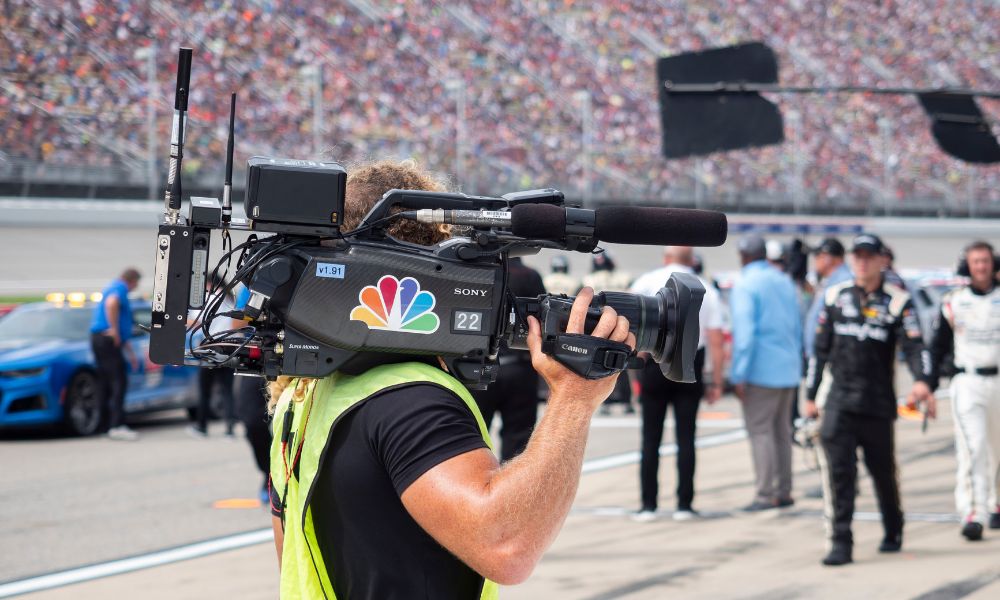
NBC, Fox, Amazon and WBD have agreed to split the Nascar Cup Series schedule in a seven-year deal worth US$7.7 billion running between 2025 and 2031
The scheduling issues with Laguna Seca were unfortunate, so how important will the transition to Fox be for avoiding similar incidents in future?
The Laguna Seca scheduling can happen; no network is bulletproof. We know that these things can happen and NBC has made accommodations wherever they could. People have asked me if the change in platforms and if Laguna Seca had anything to do with our announcement, the answer’s ‘hell no’.
There was a point in our discussions with Fox where we agreed: let’s see if we can make this an all-network series. Then we did tons of work looking at where we would have to schedule what in order to make it feasible for them. I’ve always had the objective of having our last championship points race just prior to the start of the regular season of the [National Football League], and this season accomplishes that.
We move St Pete [Streets of St Petersburg] a little earlier and we fill in what I would call our spring season a little. We have plans underway to try and add another race or two in that timeframe beginning in 2026. We’re pleased with that schedule and delighted to get it out early.
Get ready 🤙
— NTT INDYCAR SERIES (@IndyCar) June 23, 2024
Tonight's #FirestoneGP will begin at 6:30 ET on CNBC and Peacock. pic.twitter.com/PH1NvnRIJa
This year’s Indy 500 was an undoubted success after navigating substantial rain delays, so what was your reaction to the event?
I’d echo your positive critique - it turned out brilliantly. There’s so much tradition and cultural attachment, it’s beyond a sporting event in so many ways. It was also for me – and for many of us – an incredibly anxiety-ridden day.
We knew for a while that the weather forecasts called for the probability of not just rain, but storms. That means lightning and that means danger, so operational issues like cameramen can’t be up in the perches when lightning gets within a certain distance.
So what do you do? What adjustments to the pre-race show do you have to make? At what point do you have to make the decision for the safety of the fans in the stands to stop what’s going on on-track and to clear out? Finally, we had to come to that conclusion because it looked like it could hit.
We were amazed at how orderly and dutiful the fans were. In my head, I was like: ‘Right, the young people in the ‘Snake Pit’ who’d been there since 9am, we’re going to go pull the plug on the DJ, shut it down, ask them to peacefully and orderly evacuate and then maybe come back?’
It was remarkable the way the fans responded, and what was most remarkable is they came back. Then they had presented to them what I think was one of the most exciting, compelling races in my memory. It was a stressful day, but at the end of the day, remarkably satisfying.
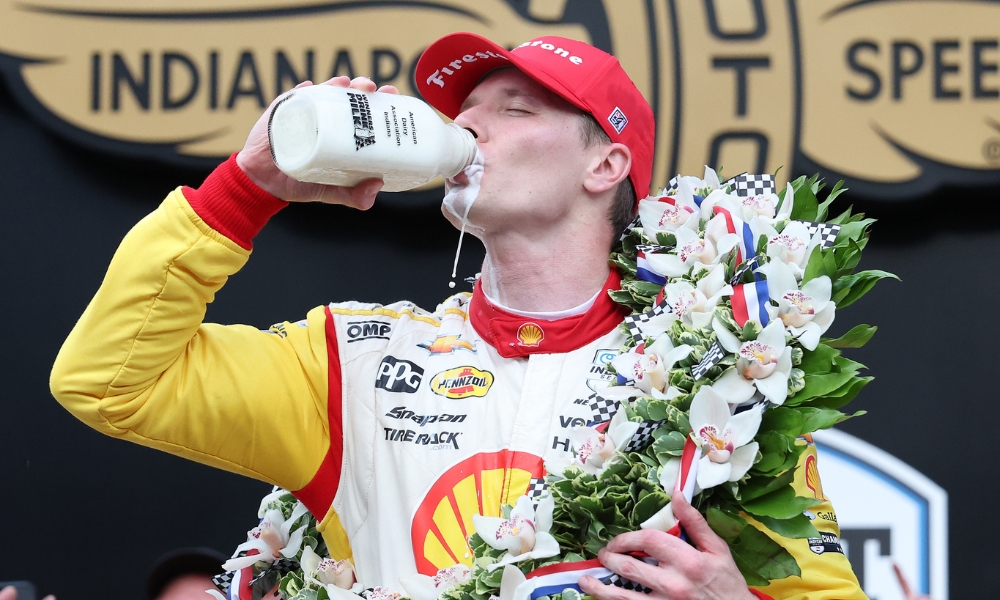
Team Penske's Josef Newgarden overtook Arrow McLaren's Pato O'Ward on the final lap to win a thrilling Indy 500, his second win in as many years
How will Fox’s approach evolve the Indy 500? What opportunities are there for cross-collaboration, notably with the Daytona 500?
Two or three things come to mind. One is that [managing director of Fox Sports] Eric Shanks grew up in Indiana, an hour west of here [the Indianapolis Motor Speedway], and grew up an Indy 500 and IndyCar fan. He keeps a motorhome I can see from here for at least 20 years outside the gates.
From our first conversations he said he can’t wait. The Indy 500 is a very high priority for them. Beyond that, Fox has deep relationships with other sports, whether that’s the NFL or others, I think they’re going to be here in May. I think they will turn out a broad spectrum of celebrities and personalities and pull out every stop to make the [Indy] 500 grow.
They also don’t have to supply network coverage to [the Coca-Cola 600 in] Charlotte on the same day, they won’t have to split. The attention span will be focused on Indianapolis and I think they’re going to do great things with it.
[With the Daytona 500], it’s in Fox’s interests to pursue [collaboration]. We’re down for it and we have a great relationship with Nascar. Hopefully that’ll be really productive, and not just with the Daytona 500.
Do you hear any of the fans’ concerns around Fox’s style of broadcasting?
Yes, I’m aware of the social media concern, and I have none. That’s not because I’m oblivious, it’s because we’ve had lots of conversations, including last weekend at Laguna Seca, with Eric Shanks about their approach.
Philosophically, they believe that they need to present each property in an authentic way for their fans. It is not consistent with that philosophy to cut and paste the Nascar approach. The production works for Nascar great, but it won’t be what you’ll see for us.
We’re already into some very specific conversations pursuant to that philosophy that assure me that decisions are being made, but I know the kinds of people that are being thought about, and it’ll be a uniquely IndyCar production.
Attendances were really strong at this year’s Indy 500, of course, but it’s looking positive across the board this season. What work has gone into that behind the scenes?
We don’t get audited statements of how many units and how much revenue was generated in ticket sales for each of our promoters. But we do get the data related to merchandise sales, which is a pretty good surrogate for attendance – not perfect, but pretty useful. The merch sales are up everywhere, maybe flat once so far this season.
We’ve pushed and pushed and tried to persuade our promoters to reinvest, so whether it’s their own food and beverage, their hospitality, the entrance to their facilities – [we’re] just continually looking to improve the fan experience.
The other thing is, although it’s not entirely new, we have a little fun and we either provide some money to them or spend some money on their behalf in those markets to try to help them present their events and sell tickets in their marketplaces. I don’t want to take credit for that from an IndyCar perspective, but we’re aligned in the objective and it seems to be helping.
Related stories
- IndyCar’s TV deal with Fox: Why has the series left NBC and what does the move mean for its future?
- IndyCar president Jay Frye on the 2024 schedule, US broadcast plans, and future expansion
There’s been a lot of talk of international expansion recently. Obviously plans to race in Argentina have been shelved for now, but are you still exploring other areas?
International needs to be defined from my perspective. IndyCar has and will continue to be a North American series. So we race in Toronto – as a US citizen, I don’t think that’s international for these purposes.
We could very well go to Mexico, and Mexico analogous to Canada, we would drive to it. Frankly, Indianapolis to Mexico City is 100 miles less than Indianapolis to LA. We’re working on that and it’s possible we could get there. But from the way we think of this as a North American championship, it isn’t any different than Portland.
The idea of creating something new that would be more of an international series in the months available to us after the IndyCar championship is decided continues to be something that we think about and work on.
We think there’s value to be created both for teams and for fans outside the US, or North America. Also inside the US because, whatever might happen in South America, for example, would certainly be on television in the US. It wouldn’t reduce the total audience, the average audience, in my mind it would be a different product, an additive.
I want fans to know that, if we do it, it’s not that we’re going to pick a race somewhere and chase the money as a one-off thing. We would want to have a number of events that are tied together through some sort of points or money, certainly with sponsorship, and it comes together as a separate international series.
We continue to have conversations with places that are interested. We had our track guy visiting a South American opportunity last week, and we’ll see. It’s hard enough to find one great event where you know you have a base of IndyCar fans and there’s brand recognition and some recognition of our drivers. To find three or four of them and to introduce them at the same time is a long putt, but we’re working on it.
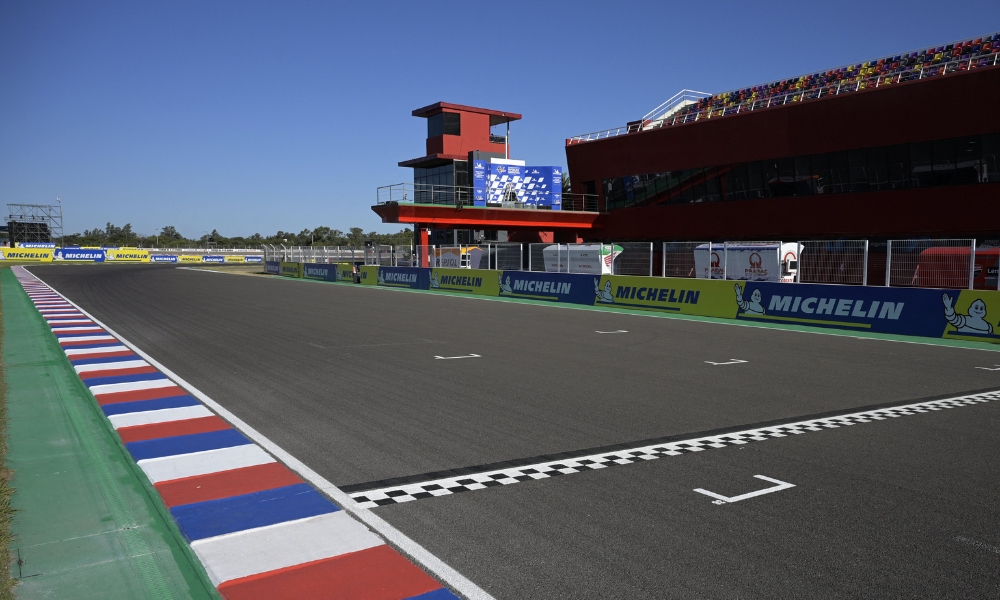
IndyCar officials toured the Autódromo Termas de Río Hondo in Argentina in March last year before plans to race in the country were shelved
You’ve previously talked about the Chicago Street Race and the Las Vegas Grand Prix as events to aspire to. Are you trying to replicate something similar in IndyCar?
We need to have our schedule evolve to include more up-and-coming, dynamic cities. If you do that, and you have the right partners and right promoters, it’ll be one of our tentpole events. We won’t bestow a specific status in that regard, but it’s more about the market and the urbanisation and growth of the series through that sort of addition to the calendar.
We’re quite close to adding one of those for 2026, and we’ve got irons in the fire with at least one more [event] – potentially two – in that same timeframe. But our hair’s not on fire about doing it. We think it’s an opportunity and we want to, over time, follow that strategy.
Of course one of those city centre races was Nashville. Is there a timeline for when you expect to switch back from the Nashville Superspeedway?
No, it’s just not knowable at this point. But I wouldn’t dismiss Nashville even though you’ve got to drive 30 minutes from your downtown Nashville hotel, from Broadway where you’re partying all night, to go out to the oval [circuit].
They’re still working on their plans for the development of not just the new [NFL team Tennessee] Titans stadium, but there’s an area around that space closer to where we raced initially.
It could be that [we return] to that [temporary circuit] and not necessarily [race] right down Broadway, but time will tell what’s feasible.
Thermal is being promoted to a full-points race next season. It’s safe to say the reaction was mixed at best, so are there any lessons to be learnt ahead of next year?
Well, it’s going to be a different thing. Last year, it was meant to be an extension of the test and a chance to mix it up and do things differently than we would in a normal championship race.
What I learnt came primarily from the drivers. We had a dinner, there was half a dozen drivers and I didn’t even bring it up. One driver asked: ‘Are we going back to Thermal?’ I said maybe as a test [and they replied] ‘No, we should go race there’.
They believe that if we had a traditional race, if there’s some adjustments to the track and obviously the pits, they thought it would make for terrific racing. So that got us to look at it again, and the owners of Thermal liked the idea of a traditional race.
They’re going to add to the track, there’s a track that wasn’t even used for what we did last year, and they’re already expanding the pits. It’ll be a traditional points race and our drivers believe it can be compelling racing.
How important is it for the series to learn and progress from Team Penske’s push-to-pass controversy?
I hope fans saw in that experience that there is a division of church and state. It’s a confirmation that Roger Penske has integrity and ethics. He would never want that decided or influenced by what’s good for his companies at the expense of the series.
We could have understood it earlier; it all came to light accidentally [at Long Beach] but I think it would have anyway. But it didn’t have any impact on the racing at Long Beach, it did have an impact at St Pete, and that’s the basis on which we took the action.
The new hybrid engines are also coming soon, so how crucial is a smooth rollout? Reliability issues deciding the championship will not be a good look for IndyCar.
We expect it to be [smooth] and it is important. We thought it was important to get it right more than to get it [done] quickly. There’s been a lot of testing, even in Milwaukee in the last week or so, and that’s all very encouraging.
No guarantees – it’s technology and it’s racing, so things could happen. But, by and large, we’re pretty confident that it’s going to be a successful introduction.
Looking to the future, how excited are you for the addition of Prema Racing next year?
They’ve got a great reputation, they’ve been successful in Europe, and they seem to be doing all the right things here. We are going to implement a system of charters, and I think they know that and they’re already looking at whether there are options for them to acquire a charter or two. But we’re looking for quality and competitive teams over quantity, and these folks from Prema are certainly a quality operation.
How much potential does IndyCar have for future growth and what needs to happen for the series to take that next step up?
We’ve announced a uniquely powerful media rights deal for the next few years that almost constitutes a relaunch. We are going to have our charter deal done with the teams for sure this season. We are introducing the new hybrid.
We are quite far along looking at the car of the future, which we’ll have more to say about this season, and it will have an effect as early as 2027. We are this season going to announce an exciting new US market to be added to the championship, and hopefully we can add a second – but that’s not as close.
We have at least four sponsor additions or extensions that will be announced this year that are important. I’m leaving things out, but before the end of this [season] all those things I have mentioned will be public and factual, which gives us momentum.
I do think there was a bit of a void [in the marketing] to some extent, other than on the track itself, over the last year, and I think we’re going to fill it in a big way. We’ll be looking at the technical marketing of that coming out of the box next year.
It’s interesting that Fox has the 2025 Super Bowl at the very beginning of February. That would be an interesting way of resetting the marketing of this series.