
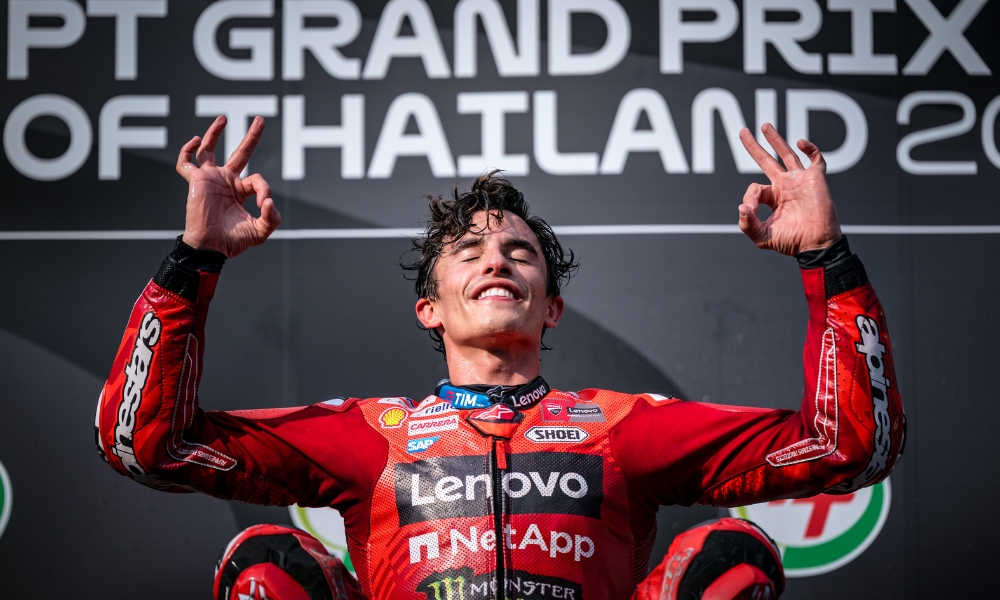
MotoGP enters 2025 with an air of uncertainty around its future ownership, but even that cannot dampen the excitement of a highly anticipated year.
Last April, Formula One owner Liberty Media agreed to acquire approximately 86 per cent of Dorna Sports, the commercial rights holder of the premier class of global motorcycle racing, in a deal worth an enterprise value of €4.2 billion (US$4.5 billion).
Approaching one year later and the acquisition is still to be finalised amid an investigation by the European Union’s (EU) antitrust department over concerns the deal could hamper competition in broadcasting and streaming markets.
CVC Capital Partners faced a similar probe in 2006, with EU competition regulators ruling that the private equity firm had to sell one of MotoGP or Formula One. However, BlackBook Motorsport understands that Liberty will not be told to the same this time and the expectation is for the deal to close by 30th June.
The on-track storylines, though, should provide sufficient distraction to the protracted sale process. Namely, six-time world champion Marc Márquez – who cantered to victory at the season-opening race in Thailand – is teaming up with two-time victor Pecco Bagnaia at the factory Ducati team, which is currently the best manufacturer in MotoGP.
Reigning champion Jorge Martín, who was overlooked for the vacant spot alongside Bagnaia and missed the opening race of the campaign due to injury, is expected to take a backseat this year having moved to the newly Yamaha-powered Pramac outfit.
Promising rookies Ai Ogura and Fermín Aldeguer will also be making their debut, joining Pedro Acosta – who receives a factory KTM ride in his sophomore season – as the faces of MotoGP’s next generation.
And what about Fabio Quartararo? Still only 25 years old, the Frenchman will be relying on a return to form for Yamaha, which will benefit from a satellite team for the first time in three seasons.
But does the series’ sponsorship portfolio elicit the same level of excitement? BlackBook Motorsport assess the current state of play.
Diversification required at the premium tier
There is a sense of stagnation around the commercial strategy of MotoGP. In many ways, the series is in a holding pattern until Liberty’s takeover is approved.
There are just six brands that fall under the highest level of sponsorship in MotoGP and the majority of them are longstanding partners.
The most enduring tie-up is with German manufacturer BMW, which has been the official safety car of the series since 1999. Swiss watch brand Tissot runs it close, having served as official timekeeper since 2001.
MotoGP’s mid-level partnerships are with DHL and Michelin, signed in 2015 and 2016 respectively. The former signed a multi-year extension in 2024, while the series’ tyre supplier will be sticking around until at least 2026.
In March 2023, MotoGP inked a global partnership with Estrella Galicia 0,0, which is a longtime supporter of many riders, including Marc Márquez. The multi-year deal saw Singha replaced as the series’ official beer, though the Thai brand still receives some visibility in Asia.
The most recent top-level deal signed by MotoGP was with Qatar Airways, which expanded its title sponsorship of the Qatar Grand Prix to become the official airline partner and official cargo airline partner of the series in May 2024.
MotoGP is clearly adept at maintaining existing relationships. Yet, striking new partnerships has been a struggle, partly perhaps due to MotoGP being so strongly associated with its European heartland. A more global approach from Liberty should help to entice a wider array of brands.
Race-focused partnerships bear fruit
If MotoGP’s official sponsorship roster is modest, then the series has been far more successful securing title partners for its Grands Prix.
There are location-specific deals with PTG Group (Thailand), Pertamina (Indonesia) and Petronas (Malaysia), for instance, while the likes of Motul and Red Bull have agreed multi-race deals, with the former to title sponsor events in the Netherlands, Japan and Valencia. The energy drink giant will see itself plastered across the races in the US and Misano.
Liqui Moly, which title sponsors the German Grand Prix, is another company linked to MotoGP through a race deal rather than an official partnership directly with the series.
On the whole, these are much lower-level commitments for brands to make and evidently the visibility from a race weekend is currently deemed more attractive than a top-level partnership.
Indeed, attendance is one of MotoGP’s strongest areas, with over three million fans going to races across the 2024 season, which was the most attended of all time. The seasons are longer than they used to be, but the average attendance per race only trails the 2018 season (151,660 in 2024 versus 151,800 in 2018).
The 2024 campaign also featured a weekend attendance record at Bugatti Circuit in France for the second year running. The 2023 record of 278,810 fans was made obsolete after 297,470 attended the 2024 edition.
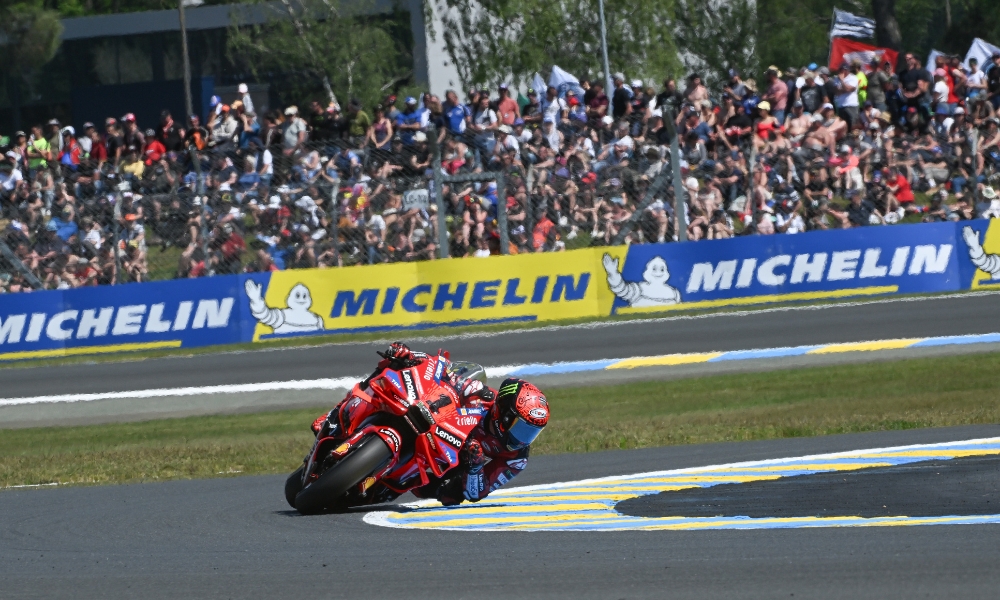
Last year’s French Grand Prix at the Bugatti Circuit was the most well-attended MotoGP race of all time, with 297,470 fans in attendance (Image credit: Getty Images)
How will Liberty change MotoGP’s strategy?
One only needs to look at Formula One to see the likely approach set to sweep through MotoGP.
Even so, it will be crucial that Liberty retains the essence of what makes MotoGP unique, without turning it into ‘Formula One lite’.
When the deal was announced, MotoGP’s chief commercial officer Dan Rossomondo told BlackBook Motorsport that “we want to make sure that we keep what makes us special and inherent to who we are”, so it is something the series is aware of.
While Liberty will point to the financial success of Formula One, a portion of that has been at the expense of the series’ history. Greater commercialisation has been pursued, seemingly at all costs, resulting in ever-shrinking space for traditional races on the calendar as new markets are targeted for expansion.
One avenue that will open up for Liberty commercially is cross-series deals, with Qatar Airways among the existing partners in both championships already.
To be truly successful, though, MotoGP will have to be promoted as a series in its own right, rather than an add-on to any sponsorship contract.
Looking to unlock more exclusive insights and strategic connections in the motorsport industry?
The BlackBook Motorsport Forum is the destination that connects and inspires top decision-makers and leaders across global motorsport. Join us in London on 27th March 2025 to dissect the critical balance between on and off-track performance, exploring areas such as technical innovation, sustainability and commercial success. Discover more here.