
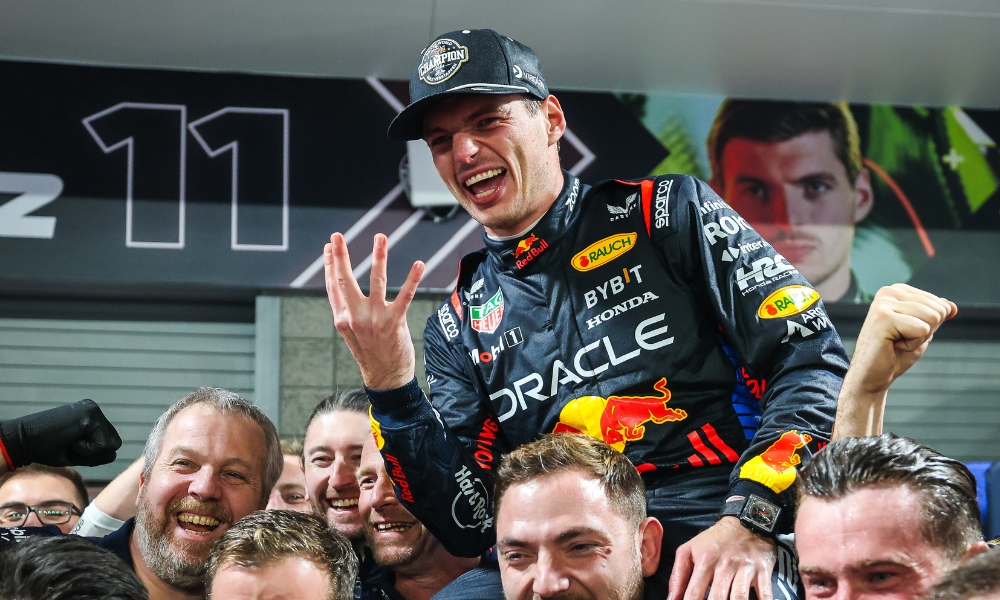
The 2024 Formula One season began with yet more dominance for Red Bull and Max Verstappen, but eventually became one of the series’ most competitive in recent memory.
Seven different drivers won two or more races during the season, which is the first time this has ever happened in Formula One history. The feat is made all the more remarkable by the fact Verstappen won seven of the first ten races.
It was also a year of firsts as Lando Norris and Oscar Piastri both took their first Grand Prix victories on the way to McLaren Racing being crowned constructors’ champions for the first time since 1998.
Lewis Hamilton won the British Grand Prix, his first win since the infamous 2021 season and his last home race for Mercedes before switching to Ferrari next year. And while the Formula One legend enters the twilight years of his career, six rookies will compete in their first full-time seasons in 2025.
But what of 2024? BlackBook Motorsport unpacks the headline numbers and fills in the gaps from an action-packed season.
Steady crowds after slow start
Attendances were strong if not spectacular for Formula One in 2024.
There are 17 races to compare data from this season to last. Of those, just the Qatar Grand Prix experienced a double-digit attendance percentage increase (22.6 per cent). Other notable increases came at the Italian Grand Prix (9.2 per cent) and the São Paulo Grand Prix (8.5 per cent).
Two races fell compared to last season – Austria and Las Vegas – and the Grands Prix in Great Britain, Belgium, and the Netherlands all matched last year’s totals.
There weren’t races in China or Imola last season so there are no comparisons to be drawn. Saudi Arabia, Azerbaijan, Austin, and Monaco did not publish official attendance figures for 2024.
While Monaco traditionally doesn’t release this information, it could be assumed in almost all other cases that a refusal to publish figures is admittance of a decrease in attendance.
Last season, Saudi Arabia saw a three-day attendance of 150,000 and Austin welcomed a massive 432,000 fans across the weekend. Azerbaijan hasn’t released official attendance figures since 2019 but has never seen more than 100,000 fans.
Filling in the blanks, and with some good estimates, Formula One had over 6.5 million fans attend the 2024 season, making it a record-breaking year. However, with one additional race compared to last year, the average per race actually stays consistent with 2023.
There were notable achievements throughout the season, though, with record attendances at the Grands Prix in Australia (452,100), Mexico (404,958), Italy (335,000), Spain (288,200), and Singapore (269,072).
This was also a campaign that saw many races initially struggle to sell tickets before Verstappen’s early-season dominance started to wane.
The official attendance figures from Formula One for the year will be released later in the offseason.
Do trends in the US reflect on the global TV audience?
There isn’t yet a global picture for viewership in Formula One but, when the figures are eventually released, it is bound to show strong results given the competitive season.
One key market that can be analysed now is the US, where it has been a year of two halves. There was perhaps some fatigue among viewers as Verstappen continued his dominance of the sport, and this feeling was likely replicated across the global audience.
The US experienced a tough start, only breaking one million viewers twice in the first seven Grands Prix. An important caveat is that the scheduling also didn’t help these races, with Australia, China, and Japan all taking place in the early hours of the morning in the US. Plus, the races in Bahrain and Saudi Arabia were moved from Sunday to Saturday due to the timing of Ramadan.
Miami broke US viewership records with 3.1 million viewers. Fittingly, this race was won by Norris and spelled the end of the predictable rhythm of Formula One as the Brit mounted a short-lived title challenge.
From Monaco onwards, which covered a span of 17 races, only four dropped below one million viewers, highlighting the strong finish to the season. However, three of those were in the final four races of the year.
During the season, 12 races saw year-over-year (YoY) viewership gains, including seven event records for viewership (Miami, Monaco, Canada, Great Britain, Italy, Qatar, and Abu Dhabi).
Overall, average viewership in the US on ESPN is down three per cent compared to 2023, falling from 1.16 million to 1.13 million. The highest annual viewership remains the 1.19 million that watched the 2022 season.
But there is important context as the scheduling for the 2024 Brazilian Grand Prix was wrecked by rain, which meant viewership almost halved YoY and prompted ESPN to not count that race towards its annual average. Without that anomaly, viewership is level with 2023.
Greater commercialisation is coming
Formula One has made huge strides commercially in recent years, and the 2024 season felt like the culmination of a lot of good work going on behind the scenes.
That’s not to say the series has reached its zenith but its foundations were strengthened when Emily Prazer was appointed as chief commercial officer in January.
Since then, Formula One has agreed 13 major partnerships this year, the most impressive being the unprecedented ten-year deal signed with the LVMH Group.
The contract with the French luxury goods company is reportedly worth US$150 million per season which, if true, would make the partnership worth a whopping US$1.5 billion.
Related posts
- F1 viewership analysis: Has the series cracked the US TV market?
- F1 team finances roundup: Is the budget cap working four years in?
- Has F1’s Las Vegas gamble paid off? We went to the Grand Prix to find out
The named LVMH brands give an indication of how this partnership will work, with Tag Heuer expected to replace Rolex as the official timepiece of Formula One. Moet Hennessy will likely take over from Ferrari Trento, which has served as the official sparkling wine of the series since 2021. The introduction of Louis Vuitton is perhaps the most intriguing, with the luxury brand able to target the intersection between sport and fashion.
In truth, the strength of Formula One right now is emphasised by the fact that none of the departing companies actually wanted to leave.
Expect to see greater commercialisation moving forward – especially if the announcement of the series’ first official chocolate bar is anything to go by.
Formula One appears keen to have both a strong and varied partnership roster. For instance, new global deals agreed with blue chip brands such as American Express sit alongside forward-thinking partnerships with the likes of Lego, Mattel, and Topps that are designed to engage younger generations.
All signs point to growth – but F1 must be wary
It’s an exciting time in Formula One. Every team is now worth more than US$1billion, countries are queuing up to host future Grands Prix, and commercial interest is surging.
Then there’s the incoming entry from General Motors (GM) under its Cadillac brand in 2026, which should fuel further growth in the US. Big manufacturers like Ford and Audi are also entering the sport, while Honda has been convinced to make a full-time return.
Clearly, the series is doing the right things to encourage growth, but its governance will come under increasing scrutiny if the International Automobile Federation (FIA) continues to be embroiled in chaos.
Under divisive president Mohammed Ben Sulayem, the FIA’s operations have been at odds with Formula One for a few years – and things only appear to be getting worse.

FIA president Mohammed Ben Sulayem has become an increasingly divisive figure in Formula One during a controversy-filled spell at the sport's governing body (Image credit: Getty Images)
Race director Niels Wittich and chief executive Natalie Robyn headline a raft of high-profile exits from the FIA in the past 18 months, with six departures having occurred in the last three months alone.
Now, according to Sky Sports, Ben Sulayem is seeking unprecedented power. A proposed rule change would make the Emirati responsible for judging the merits of all ethical complaints against the FIA, including against himself.
Having previously been placed under investigation for allegedly interfering with last year’s Saudi Arabian Grand Prix and attempting to block the certification of the circuit in Las Vegas, Ben Sulayem is no stranger to controversy, though both allegations were dismissed.
Formula One mustn’t let itself get caught up in the turmoil surrounding the FIA if the series is to capitalise on the promising position it now finds itself in.
