
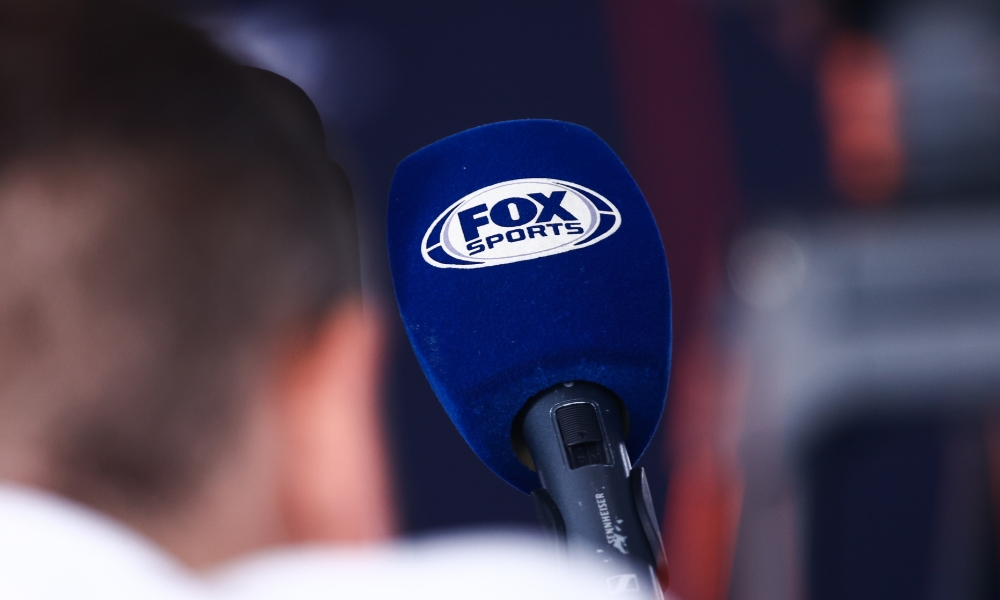
Next year will kickstart a new broadcasting era for IndyCar, which has confirmed that it will be departing longtime partner NBC at the end of this season in favour of new beginnings with Fox.
The series’ 16-year relationship with Comcast-owned NBC was fruitful, especially as the broadcaster was the first to truly go all-in on IndyCar. But it’s been clear for some time that the US championship was open to a fresh start with a different partner.
That’s not to say the series didn’t make strides on NBC. In fact, quite the opposite is true. Last year was the most-watched IndyCar season since 2011, but the audience figures from the 2024 campaign to date suggest that momentum is stalling.
IndyCar’s partnership with NBC has been about trying to win back viewers after its tumultuous past, with the scars of the infamous 1994 ‘split’, which led to the formation of the Indy Racing League, still visible in the series’ viewership today.
That history is crucial context, as IndyCar’s reunification with Champ Car was only 17 years ago. The year after, NBC came on board to support the recovering championship.
Now, as IndyCar opts for a change from the status quo, it is taking a step into the unknown with a new broadcaster.
What has been agreed with Fox?
From 2025, all IndyCar races will air exclusively on the main Fox channel. Spanish-language coverage will be available on Fox Deportes, which will be crucial for the legion of Mexican fans supporting Arrow McLaren’s Pato O’Ward.
Alongside every race, the qualification weekend for the Indianapolis 500 will also be featured on Fox, meaning there will be 19 windows of coverage on the network’s flagship channel during the 2025 season. This makes IndyCar the only motorsport series whose races will be aired exclusively on broadcast television in the US.
Outside of the Indy 500, all practice and qualifying sessions will be shared between the FS1 and FS2 cable channels, while the majority of Indy NXT races will air on FS1.
For viewers in the US without cable, these sessions will only be available through Fox’s new streaming venture with ESPN and Warner Bros Discovery (WBD) called Venu Sports.
Why did Fox want IndyCar?
This is not the first major motorsport broadcast deal recently agreed by Fox, which is one of four companies involved in Nascar’s historic new US$7.7 billion media rights contract.
From next season, however, Fox’s package will include four fewer Cup Series races than its current agreement, only five of which will air on Fox, with the others being broadcast on FS1. It has also lost one of Nascar’s flagship races, the Coca-Cola 600, to Prime Video.
The broadcaster therefore may have felt like it needed to make a statement, especially to motorsport fans, and there could have been few better ways to fill that hole in its schedule than with an iconic race held on the very same weekend: the Indianapolis 500.
As a result, from next season, Fox will offer fans both the Indy 500 and the Daytona 500, the most anticipated dates in the US motorsport calendar. In many ways, that makes Fox the undisputed home of US motorsport, and it is also the first broadcaster in the country to ever hold the rights to both events at the same time. The two races brought in over ten million viewers combined this season despite both suffering from rain delays.
If Fox can transfer the momentum behind the Indy 500 to the rest of the IndyCar calendar, then it will reap the rewards of giving the series consistent exposure on its main channel.
There are no details regarding how much Fox has paid to secure the IndyCar rights. NBC is paying a reported US$20 million per year under the expiring contract. Reports suggest that Fox’s deal will be no higher than US$25 million.
Why did IndyCar leave NBC?
While NBC and IndyCar had built a solid relationship, it was becoming clear that inconsistent platform distribution and unavoidable external factors were starting to have an impact on the series’ reach and visibility.
The fact that last year was the most-watched IndyCar season in more than ten years was largely down to 13 of the 17 races being broadcast on commercial television, but that was only the fourth time in the last 50 years that this had happened.
This season, NBC reduced the schedule of races on its main channel to just nine. The issue is that NBC has a wide portfolio of media rights to both overseas and domestic sports properties, which means IndyCar gets demoted to USA Network and the Peacock streaming platform – sometimes exclusively – when other sports are given priority.
This summer, for example, NBC’s coverage of the Paris 2024 Olympics will disrupt the IndyCar schedule to the extent that the series will be required to take a midseason break from competitive action. This is one of several factors that has contributed to IndyCar looking elsewhere.
Worryingly for IndyCar, which has now had six of its nine races on NBC this season, it is yet to record over one million viewers for a single event outside of the Indy 500. Any conversations around a potential renewal will not have been helped by that viewership plateau and could have played a part in convincing IndyCar executives that a switch to Fox would open up opportunities for audience growth.
What are the positives of the deal?
First and foremost, a consistent home for IndyCar on network television can only be a good thing, especially if the series is looking to attract casual fans. Anyone in the US looking for something to watch on a Sunday afternoon can stumble across an IndyCar race.
In the same way, it helps diehard fans as they will no longer need to check the schedule to see which of the three NBC platforms will be showing the race on any given weekend. The second-tier Indy NXT series will also become more accessible, getting a slot on FS1 rather than being exclusive on Peacock.
Crucially, though, IndyCar will benefit from summers of little competition from a scheduling perspective. While this may not be the case in 2026, when Fox will be the exclusive US broadcaster of a home Fifa World Cup, the normal order of business will see IndyCar up against only Major League Baseball (MLB) and drag racing’s National Hot Rod Association (NHRA).
Compare this to NBC, which broadcasts Olympics coverage alongside the French Open and various Nascar races throughout the summer, and the competition is undoubtedly reduced.
It will therefore be interesting to see if there is any knock-on effect on viewership from next season.
Are there any challenges?
With the rising cord-cutting culture in the US, the increase in cable coverage is not necessarily a good thing for all fans who want to watch every qualifying session in addition to the live races.
Previously, viewers could access content for US$6 per month on Peacock, while the new Venu Sports venture is likely to be on offer for at least US$40 per month, according to Deadline.
IndyCar’s viewership on Peacock was negligible at best, but it still leaves viewers facing a tough choice. A subscription that contains FS1 and FS2, such as YouTube TV, starts at US$70 per month. Alternatively, a digital antenna costs up to US$30, but these are not always an accessible option in some areas of the US.
Ultimately, there will be a larger audience to target thanks to this deal, but the change will still irk some fans. A large portion of this discontent stems from Fox’s Nascar broadcasts, which are laden with commercials. Fans are also concerned about Fox’s broadcasting style, with words like ‘cringe’ and ‘corny’ often used to describe it on social media.
In this light, Fox must ensure that it approaches IndyCar with respect, especially considering the quality of coverage the series received on NBC.

What does this deal indicate about IndyCar’s future?
Securing prominent coverage for the duration of the deal is an important milestone for IndyCar, as the consistency for viewers will be key. It also suggests that the series put significant emphasis on reach during negotiations.
That level of security will also enable the series to flesh out its schedule. Currently, IndyCar suffers from a stop-start calendar due to various commitments with circuits and broadcasters. The confirmed 2025 schedule is already evidence of a shift, with no substantial gaps between races during the season.
If anything, the way the series is structured in 2025 is an indication of the direction of IndyCar moving forward. Six races across the first three months of the season is a slow start, but an 11-race stretch in the final three months represents a sprint finish.
It will be easy to generate excitement as the IndyCar season reaches its crescendo, and hopefully build up momentum in viewership that is so often lost after the Indy 500. For example, last year’s season finale at Laguna Seca only managed 538,000 viewers, the third-lowest viewership of the entire season.
Of course, the shift to Fox will take some getting used to after so long being associated with another broadcaster. But IndyCar executives have shown they are willing to take a risk to pursue the growth of the series.