
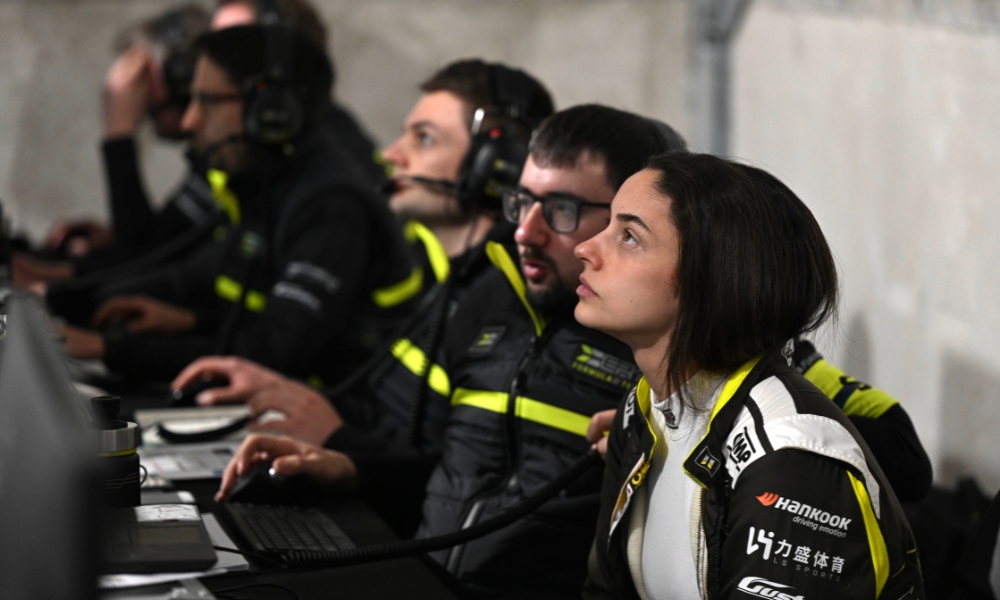
Last week, Formula E revealed that it will be the first-ever International Automobile Federation (FIA) championship to hold an all-female test event.
Taking place in November as part of official preseason testing in Valencia, each team will be required to field at least one woman for the half-day session, but encouraged to field two.
In addition to the on-track action, the test day will also give the drivers an opportunity to grow their personal profile through a variety of media activities, such as press conferences, briefings, interviews, and broadcast and social media content.
It’s no secret that diversity has long been an issue in motorsport. From a competitive standpoint, only three per cent of the current top-tier FIA racing licences worldwide are held by women, and this test represents a step towards addressing that imbalance.
It also marks the latest programme focused on gender equity to be rolled out by Formula E, which expanded its Girls on Track programme to cover all race weekends in 2024 and now has several women within its leadership team.
While the all-female test will give the participating drivers a moment in the spotlight, the series itself has acknowledged that the initiative is part of a long-term strategy to remove barriers for women, rather than just creating a ‘one-off opportunity’.
One of the individuals now involved in driving that strategy is Beth Paretta, who has served as Formula E’s vice president of sporting since May this year. Paretta is still relatively new to the role, but she is well known for her efforts to improve diversity in motorsport from leading the woman-owned, woman-forward Paretta Autosport team which has competed in IndyCar’s iconic Indianapolis 500.
Paretta’s remit is not strictly focused on diversity, but the decision alone to appoint someone with her background suggests that making improvements in that area is a priority for the series. After all, she co-founded Women in Motorsports North America (WIMNA), serves on the board of directors of the Motorsports Hall of Fame America, and is a delegate to the FIA Women in Motorsport Commission.
This test is obviously not the silver bullet for solving diversity issues on and off the track, but it’s an important sign of progress. And, as she tells BlackBook Motorsport, Paretta knows exactly how much work is still to be done.
Big news from @FIAFormulaE today. Proud to work with colleagues who value investment in the future of our sport. https://t.co/GVvP4qv9tL
— Beth Paretta (@BethParetta) October 2, 2024
How did this idea come to fruition?
The idea had been brewing here [at Formula E] actually before I joined. When I was in discussions about joining, Jeff Dodds was telling me that diversity in motorsport is incredibly important to him. I think the thing to note is, because he’s always been around motorsport as a fan, it’s something that he can recognise.
When people start paying attention, you obviously see the deficit in the gender equity. But now that [Dodds] is in this role as the CEO of the championship, he obviously then starts to look at the economics of it and the value to growing a fanbase.
What are you hoping to achieve with this dedicated test?
We told the teams in Berlin [in May] … of this idea of having a test where every team was going to have, ideally, two women per team. So obviously the quick maths: 11 teams, that’s 22 women. Are there 22 women at the top level? No, not right now. But are they close? Are they on that ladder? Yes.
We announced it early so that they could sit with the idea and then figure out how to solve it…this is the first time all the teams will be driving the Gen3 Evo, we’re going to have comparative data among all the teams and it’s really the kickoff to the season.
Someone asked me why wouldn’t we have [the women] be the first session? That way they do the shakedown of the car. I had to say to them this test isn’t to test the car, it’s to test the women and to give them an opportunity.
We really want them to be integrated with these teams. It’s an opportunity for these team principals to get to know the women in the landscape, and for these women to understand how these Formula E teams work, how the car operates, and learn more about the series.
How important is the visibility that this session will deliver for the drivers?
These women have dedicated their lives to become professional racing drivers. We want Formula E to be on your consideration list as a driver as you’re coming up the ladder. We want you to know this is a place for you, this is great racing, the fastest single-seater [car] that you can be in, and it’s competitive.
To have the opportunity to actually be there [at the test] and be behind the wheel of the car, it makes it so much more tangible and real. We’re being very careful to make sure that [the drivers] know that we’re making this effort. This is driven by the series because the series believes that this is important.
The thing I say is women don’t have a lack of talent, women have a lack of opportunity. Any time the powers that be can create that opportunity, that’s when the magic happens.
Do the number of senior positions filled by women at Formula E speak to the series’ forward-thinking nature?
I would absolutely stress that the women who are in the jobs, they’re in the jobs because they’ve earned the jobs. But we happen to be women and we happen to be going about our daily tasks and getting the work done. But there is that moment where you step back and say, ‘hang on, let’s put a light on this because it isn’t the norm.’
The day we announced in Berlin about the women’s test…the last row [in the room] we all happened to be kitted up in our Formula E uniforms. I was sat in a row with Aarti Dabas, our chief media officer, [vice president of sustainability] Julia Pallé, myself, [partnerships director] Cara [Pelchen], [sporting director] Claudia [Denni], and [sporting manager] Emily [Holloway]. It occurred to me what an amazing visual [it is] that these women [are] sitting in this row, all very integral to running this business.
Could you have seen a different series that would have had those roles all filled, coincidentally, by women? No. If you took a photo of that and posted it, would it affect somebody? Yeah.
That’s the cool stuff, right? We’re just going about our day, but I think sometimes we should shine a spotlight, because maybe it’ll affect some more change. It’s one thing to show young girls what’s possible, it’s another thing to show your male colleagues what’s possible.
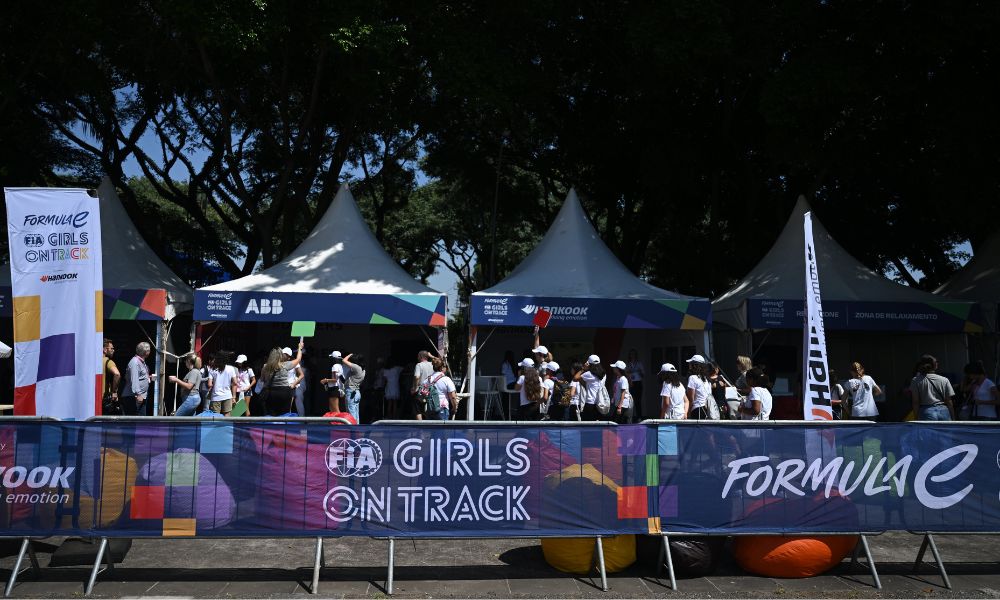
The Girls on Track initiative forms a big part of Formula E’s efforts to improve opportunities for women in motorsport
How will you ensure this test results in more lasting impact further down the line?
Different teams have already said to us that some of these women may become ambassadors, and that’s not a word to be taken lightly. That means really being integrated, coming to the workshop, being at events, some of them might work into being test drivers, so they’re going to get simulator time. There comes a point where they could be a reserve driver.
I want to caution that everybody has to understand that there’s a pace to this, too. Let’s be clear: F1 Academy to Formula E? Nope, there’s a few rungs of the ladder in between. So, if you see these people at a test and then you don’t see them as a test driver three months later, that’s normal.
You also don’t want to throw someone in the deep end and have them fail, so it’s more about that. Let’s create these relationships so that when they progress on the ladder, they are already in the ecosystem of these teams. Some of the women that are more advanced, could they wind up signing to be a reserve driver? Absolutely.
How far away are we from having a woman on the Formula E grid?
Do we hope that, if not for next season, by season 13 would we want to have a woman on the grid? For sure. Are there women who could be on the grid today? Yes, there are. Should some of the teams be calling them? Yes, they should. But there’s only so much we can encourage.
There are some things that are happening with the development of Gen4…that should also make it a little easier [for a woman] to drive. There’s been a lot of comments about the current car being impossible to drive. If you want to ask somebody, ask Simona de Silvestro, who’s driven a current [car in] Formula E and IndyCar.

How is your position going to impact Formula E and how do you see it evolving?
It’s a really exciting time to have joined this series. I interface with the FIA, which has to do with the sporting regulations and the development of the car. I work with the OEMs, which is again the development of the car, but also making sure that they’re getting value out of the series.
The other part of my remit is interfacing with the teams, making sure the teams are getting what they need. So it’s teams, manufacturers and the FIA on the competition side – it touches on commercial because, at the end of the day, all of these entities are in business, so you have to be aware of all of that.
The diversity thing comes with me, it comes with the package, and Jeff [Dodds] very shrewdly knew that.
Related posts
- Competitive racing, street circuits, and a US$250k bet: Why Formula E is making more noise about F1 than ever before
- Podcast | 2024 Formula E season review: F1 comparisons, Liberty Global acquisition, and moving behind a paywall in the UK