
Another year of Formula E is in the books, but did the 2023/24 season live up to expectations?
After all, the year began with bold declarations about the all-electric championship’s competitiveness when stood up against the comparatively processional Formula One.
Comparisons between the two series have been made in the media since the electric championship’s inception, but chief executive Jeff Dodds has made a concerted effort to draw attention to Formula E’s points of difference since his appointment.
The most public attempt to do so was his promise to donate US$250,000 to charity if Red Bull’s Max Verstappen doesn’t win the world championship this year, which he made before the Formula One season became one of the most competitive in recent memory. In that sense, the strategy has slightly backfired, even if the Dutchman is still likely to be crowned champion at the end of the year.
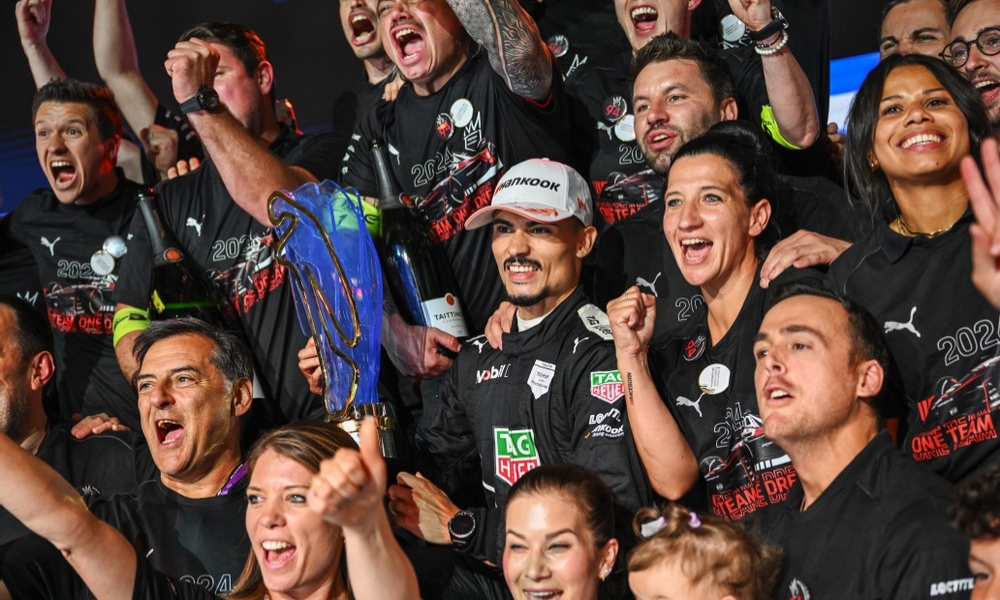
Even so, Formula E can still point to a season finale of its own where seven drivers could have won the title. Ultimately, Porsche’s Pascal Wehrlein came out on top in a thrilling conclusion to the campaign. In comparison, Formula One will probably not end up with the same type of title-decider, although a lot of that comes down to the length of the calendar.
Still, many would argue that Formula E should be promoting what makes it different from other motorsport series, rather than being combative with its marketing and communications. Dodds is only a year into leading the series, so various approaches will likely be trialled to get the balance right.
As the dust settles on the 2023/24 season, BlackBook Motorsport analyses the off-track talking points to evaluate the current position of the all-electric series.
Where is the money coming from?
There were two major financial developments this season.
Firstly, Liberty Global acquired a controlling stake in Formula E back in June by purchasing the shares owned by Warner Bros Discovery (WBD), taking its total ownership to 65 per cent. It’s important to note that Liberty Global is not Liberty Media, which appears to have been a common misconception since the deal was announced.
Liberty Global separated from Formula One’s current owner in 2005, and it has also been involved in Formula E since the very beginning. The appointment of Dodds as chief executive last year was in essence a transfer from O2 Virgin Media, another company owned by Liberty Global.
Either way, this move comes at an important time for the series, especially if its most recent financial accounts are anything to go by. Formula E managed to reduce its losses for the 2022/23 season by 35.6 per cent year-on-year (YoY), but it still lost €41.8 million (US$45.2 million) over the course of the campaign.
The promising news is that revenues rose 21.2 per cent YoY to €219.9 million (US$237.9 million), although the 2023/24 season was not without its commercial challenges.
Sponsorship deals were agreed with the likes of Aggreko, Taittinger and Google Cloud, but the biggest news was Hugo Boss’s decision to cut ties with Formula E, opting instead to focus on its partnerships in Formula One.
In that context, the second major financial development this season was arguably Saudi Arabia’s Public Investment Fund (PIF) agreeing to become the principal partner of Formula E at the start of this year.
With the fund’s estimated assets totalling US$776 billion, the all-electric series can count on an extremely wealthy backer to ease the pain of its financial losses. It also further deepens Formula E’s ties with the sovereign wealth fund, which already owned a five per cent stake in the series.
FTA remains a priority but viewership picture unclear
From a broadcast perspective, Formula E enjoyed a positive start to the season.
In an official announcement, the series said its cumulative TV audience grew 40 per cent across the first four races of the year, with a remarkable 57 per cent spike for the first ePrix alone. However, there have been no further releases about viewership at the time of writing, which might tell its own story about the trajectory of Formula E’s TV audience.
These are global viewership figures, but the decision to move Formula E behind a paywall in key markets is unlikely to have had a positive impact on audience numbers. Speaking to BlackBook Motorsport at the time of the deal, former chief marketing officer Henry Chilcott admitted that the switch from commercial broadcaster Channel 4 to TNT Sports in the UK would be “challenging” for existing fans.
Elsewhere, the series agreed a streaming-focused deal in the US with Roku, while an important multi-year extension was secured with SpoTV in the APAC region.
As always, though, the most important thing for a fledgling sports property looking to build an audience is free-to-air (FTA) exposure.
Formula E has been able to remain in front of the paywall in some European markets, agreeing its largest-ever FTA distribution in Germany and Austria with DF1 and ServusTV. Multi-year extensions were also finalised with Mediaset in Italy and L’Équipe in France.
In the UK, though, FTA broadcasters were not so forthcoming. The series failed to secure a consistent home in the market, bouncing between the BBC, ITV4, Channel 5, and finally Channel 4. The season finale was sublicensed to Quest in the UK, but it remains to be seen what impact that had on viewership.
Sustainability remains a key focus
Amid the constant comparisons with Formula One this season, it’s easy to forget that sustainability is at the heart of Formula E.
In fact, this season has seen extremely positive progress on that front, which is something the series could be making more noise about.
At the start of the season, it was crowned the most sustainable motorsport championship in the world for the third year running by independent evaluator Enovation Consulting. This was quickly followed by the news that the series has cut its freight carbon emissions by 41 per cent since 2019.
This year also saw positive stories like its investment in Sustainable Aviation Fuel (SAF) in collaboration with DHL for the logistics around the Shanghai round. The series also invested in an environmental education programme for children called Driving Force.
On top of the strides being made in the field of environmental sustainability, it’s equally encouraging to see the success of the International Automobile Federation’s (FIA) Girls on Track initiative this year. Rolled out at every Formula E event for the first time, the series doubled participation in the female diversity programme compared to last year.
Plus, Formula E is clearly taking the matter of female visibility seriously with its recent appointments in influential roles. Tiziana di Gioia joined as chief revenue officer in January, followed by Beth Paretta as vice president of sporting in April. Charlotte Sefton was named director of communications in May, before Ellie Norman was confirmed as chief marketing officer earlier this month.
Setting up for the future
Despite the bold statements this season, the 2023/24 season has felt like a transition year for Formula E, the benefits of which are more likely to be reaped down the line.
Liberty Global’s increased control and PIF’s financial support provide sturdy foundations, while greater consistency in the series’ lineup of broadcasters and sustainability messaging should help to build its fanbase.
The show of faith from Porsche, Jaguar, and Nissan in committing to Formula E until 2030 highlights that some key manufacturers think things are heading in the right direction, while Lola Cars will make its long-awaited return to motorsport from next season with Yamaha.
Despite falling short in its attempt to compete with Formula One this year, the premier motorsport series does appear to be influencing the future direction of Formula E. The all-electric series is focusing on US expansion with a new race in Miami in 2025, while last weekend’s race at the ExCeL will likely be the last at the venue. Instead, Formula E is looking to make an ambitious move to Silverstone, the home of Formula One in the UK.
Plus, in a deal announced this year, the series will be replacing current tyre supplier Hankook with Bridgestone from 2026, which was Formula One’s tyre supplier between 1997 and 2010.
It will be interesting to see how this strategy develops, especially now ex-Formula One marketing lead Ellie Norman is on board to spearhead the series’ strategy in that area.
Ultimately, Formula E is at its best when it offers itself as an alternative, rather than a competitor, to the world’s more established motorsport series.